

Table of Contents
- How to Remove Rust from Metal Decor: Step-by-Step
- Vinegar Rust Removal and Other Household Methods
- How to Remove Rust from Metal Before Painting
- Choosing a Method by Metal Type and Finish
- Preserving Patina and Vintage Value in Rusty Metal Decor
- How to Protect Metal from Rust Outdoors
- When Not to DIY Rust Removal on Metal Decor
- Conclusion
- Frequently Asked Questions
Last Updated: October 14, 2026
How to Remove Rust from Metal Decor: Step-by-Step
When you purchase a NEW Rusty Decor product, it is SEALED with a rust resistant clear coat and ready for your home. All you need to do is find the perfect place for displaying your rustic home decor and you are good to go.
However, if you have old rusty metal decor lying around your home, it doesn't have to mean the end of a favorite piece. We've seen how quickly a little surface rust can spread on porch signs and wall art and we are here to help you.
The key is to clean rusty metal decor gently. Harsh scrubbing strips paint and destroys the finish you're trying to save.
Below, we cover the full process. We'll show you how to treat rust spots, protect the finish, and keep your pieces looking good for years.
Rust is iron oxide. It forms when steel or iron meets moisture and oxygen. U.S. Department of Energy materials corrosion overview explains that even humid air can start the process on bare metal.
Step 1: Assess the Rust and the Finish
Start by looking closely at the piece. Is the rust light and powdery? Or has it eaten into the metal?
- Light surface rust: orange dust, wipes off with a cloth
- Medium rust: rough patches, metal still solid underneath
- Heavy rust: flaking, pitting, or holes in the metal
Check the finish too. Painted metal, bare steel, and patina all need different handling. Test an inconspicuous area before you treat the whole piece. A spot on the back or bottom works well.
Step 2: Set Up Your Work Area and Test First
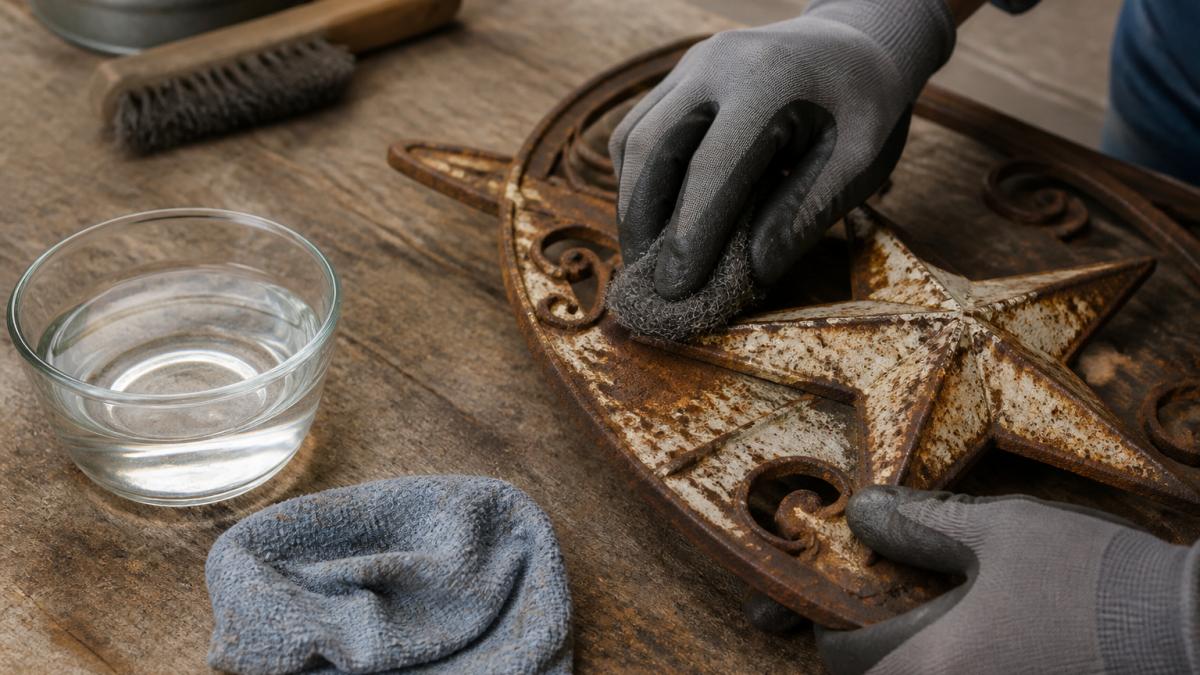
Lay down newspaper or a drop cloth. Work outside or in a well-ventilated space. Vinegar fumes and rust dust add up fast.
Gather your supplies before you start:
- Soft cloths and an old toothbrush
- Fine steel wool (0000 grade) or a Scotch-Brite pad
- White vinegar, baking soda, or lemon juice
- A small bowl for mixing
- Rubber gloves and eye protection
Test your chosen method on a hidden spot. Wait a few minutes. If the finish holds, continue. If paint softens or color lifts, stop and try something gentler.
Step 3: Treat, Scrub, Rinse, and Dry
Apply your rust remover to the affected spots. Let it sit. Then scrub lightly with the grain of the metal.
- Soak a cloth in white vinegar and wrap it over the rust. Wait 30 to 60 minutes.
- Scrub with fine steel wool using light pressure.
- Rinse with clean water to remove all residue.
- Dry thoroughly with a soft cloth. Don't let it air dry.
Water left on metal restarts the rust cycle. Dry every crevice, including screw holes and edges.
Vinegar Rust Removal and Other Household Methods
Vinegar rust removal is the most popular DIY method, and for good reason. It's cheap, safe, and works well on light to medium rust.
Here's how the common household options compare, with decor-specific trade-offs:
|
Method |
Best For |
Time Needed |
Watch Out For |
|---|---|---|---|
|
White vinegar (5% acetic acid) |
Light to medium rust on bare steel or iron |
30-60 min soak, check every 15 min |
Dulls bare steel; softens some paints; can darken cast iron if left too long |
|
Baking soda paste (3:1 soda to water) |
Small rust spots on painted or delicate metal |
15-20 min dwell |
Mild, needs gentle scrubbing; won't touch heavy rust |
|
Lemon juice + salt |
Light surface rust on brass or copper |
20-30 min |
Salt promotes corrosion if not rinsed completely; can irritate skin |
|
White vinegar + baking soda fizz |
Loose surface rust in crevices |
10-15 min |
Mostly mechanical, the fizz lifts debris, it doesn't dissolve rust |
|
Commercial rust remover (phosphoric- or oxalic-acid based) |
Stubborn rust, bare metal only |
Varies by product |
Read the label; many are not safe for paint or plated finishes |
|
Evapo-Rust-style chelating remover |
Delicate or detailed pieces |
20 min to several hours |
Water-based and paint-safe on many finishes, but check the label for your metal |
How vinegar actually works. Acetic acid reacts with iron oxide and converts it to a water-soluble compound you can rinse away.
For a baking soda paste, mix three parts baking soda with one part water. Spread it over the rust.
Lemon juice works much like vinegar. Add a pinch of salt for extra scrubbing power. Rinse well afterward, since salt promotes corrosion.
A note on what household methods won't do. None of these will rebuild pitted metal, fill holes, or stop rust that's already under a paint film. If rust keeps bubbling back through paint within a few weeks, the problem is underneath the coating, you'll need to strip, treat, and re-prime, not just spot-clean.
How to Remove Rust from Metal Before Painting
Prepping metal for paint follows the same steps, with one extra rule: the surface must be completely clean and dry.
Paint won't bond to rust, oil, or dust. Skip any step and the new coat peels within months.
Follow this order:
- Remove all loose rust with fine steel wool or a Scotch-Brite pad.
- Wipe the surface with a damp cloth, then dry it fully.
- Sand lightly with fine sandpaper for paint grip.
- Wipe away dust with a tack cloth.
- Apply a rust-inhibiting primer made for metal.
- Paint within the primer's window, per the label.
According to U.S. Environmental Protection Agency guidance on lead-safe renovation, older painted metal may contain lead. Test before sanding anything made before 1978, and follow safe work practices.
Choosing a Method by Metal Type and Finish
Not every method suits every piece. The metal type and finish decide what's safe.
- Bare steel or iron: Vinegar soaks and fine steel wool work well.
- Painted metal: Skip soaking. Spot-treat with baking soda paste and a soft pad.
- Galvanized metal: Use vinegar sparingly. Strong acids strip the zinc coating.
- Cast iron: Avoid long soaks. Dry and oil immediately after cleaning.
- Brass or copper: Use lemon juice and salt, then rinse fast.
Test an inconspicuous area on every piece. A method that saves one sign can ruin another.
Preserving Patina and Vintage Value in Rusty Metal Decor
Sometimes rust is the point. On vintage metal decor, an even patina adds character and value. Old signs and farm tools often sell for more with their original aged finish.
So don't strip everything. Clean the dirt. Leave the patina.
Here's how to tell the difference:
- Intentional patina: even, dark, stable, dry to the touch
- Active rust: orange, powdery, spreading, flaky
For patina you want to keep, wipe with a dry cloth and skip the vinegar. For active rust, treat the spot only. Then seal the area to stop it from spreading.
How to Protect Metal from Rust Outdoors
Protection is the step most people skip. Clean metal left bare will rust again, often within weeks in a humid climate.
Match the coating to the finish, not just the metal.
- Bare steel or iron: A clear metal sealer or a thin coat of boiled linseed oil works, but both darken the metal slightly. Test on the back first. Reapply sealer every 6-12 months outdoors.
- Painted metal: Don't seal over paint, wax it instead. A paste car wax (carnauba-based) leaves a water barrier that won't yellow or flake. Reapply every 3-6 months, or after any hard rain season.
- Patina you want to keep: Use a microcrystalline wax (often sold as Renaissance Wax or a conservation-grade paste wax). It's pH-neutral, doesn't darken patina, and is the standard choice for museum and antique metal. Apply thin, buff clear.
- Galvanized metal: The zinc coating is the protection. Don't wax or seal it, just keep it clean and touch up any scratched spots with a zinc-rich cold galvanizing compound.
- Cast iron: Season it like cookware. A thin coat of oil baked on at low heat builds a protective layer that also looks right on decorative pieces.
Outdoor placement matters as much as coating.
- Keep pieces off wet ground. Use hooks, stands, or wall mounts so air moves under and behind the piece.
- Avoid spots where sprinklers hit or where water pools on a ledge.
- Face pieces so water drains off rather than sitting in lettering, scrollwork, or recessed details.
- In coastal areas, salt air accelerates rust. Expect to reapply protection twice as often, and rinse pieces with fresh water after storms.
Touch up immediately. A chip in paint or a scratch through a coating is an open door for rust. Keep a small bottle of matching paint or a rust-inhibiting primer pen on hand and fix chips the same week you spot them.
Indoor decor needs a different plan. A dry room and an occasional dusting usually keep rust away. The exceptions are bathrooms, kitchens, laundry rooms, and basements, anywhere humidity hangs in the air.
Seasonal maintenance beats one-time treatment. A simple cadence works for most decor:
- Spring: Inspect after winter. Look for new rust blooms, chipped paint, and loose mounts.
- Summer: Reapply wax or sealer before the humid stretch.
- Fall: Clear fallen leaves and debris that trap moisture against the metal.
- Winter: Bring small pieces inside if your area sees heavy snow or freeze-thaw cycles.
When Not to DIY Rust Removal on Metal Decor
Some jobs are past saving at home. Know when to stop.
- Deep pitting or holes in the metal
- Rust that returns within weeks of cleaning
- Structural cracks or weak spots
- Valuable antiques or signed pieces
- Painted metal from before 1978, until you test for lead
For these pieces, a professional conservator or metal restorer is the safer call. A bad DIY job can cut an antique's value in half. A pro knows how to clean without harming the finish.
Conclusion
Rusty metal decor is a battle you can win with patience and the right method. The trick is matching your approach to the metal and the finish, then drying and sealing every time.
Our handcrafted metal decor uses durable construction for indoor and outdoor use. Every sign, nativity set, and door hanger is made to age well, not fall apart.
Ready to add character to your porch or ranch? SHOP NOW and find a piece built to last.
Frequently Asked Questions
How do you clean rusty metal decor without damaging the paint?
Use the gentlest method that works. Start by wiping loose rust with a soft cloth, then try a baking soda paste or a short vinegar soak on a small test area first. Avoid coarse sandpaper or wire brushes on painted surfaces. A fine abrasive pad used lightly with the grain removes surface rust spots without stripping the paint. Rinse with water and dry thoroughly to prevent new corrosion.
Can vinegar remove rust from decorative metal?
Yes, vinegar rust removal works well on light to moderate rust. Submerge the piece in white vinegar for 1 to 12 hours, checking every hour. For large decor that won't fit in a container, wrap it in vinegar-soaked cloths. After soaking, scrub with a fine steel wool pad or abrasive pad, rinse with water, and dry immediately. Vinegar can dull some finishes, so test an inconspicuous area first.
Should you remove rust from antique metal decor?
Not always. A stable, even patina on antique metal decor adds character and vintage value. Removing it can reduce the piece's worth. Only treat active, flaking rust that threatens the metal's structure. If the rust is powdery or spreading, clean it gently and apply a protective coating. For valuable antiques, consult a professional conservator before doing any rust removal.
How do you protect metal decor after removing rust?
After rust removal, apply a protective coating to block moisture. Clear polyurethane, wax, or a rust-inhibiting spray work well for indoor pieces. For outdoor metal decor, use an exterior-grade clear coat or paint made for metal. Reapply every 6 to 12 months depending on weather exposure. Keeping pieces dry and touching up scratches promptly also extends the finish.